
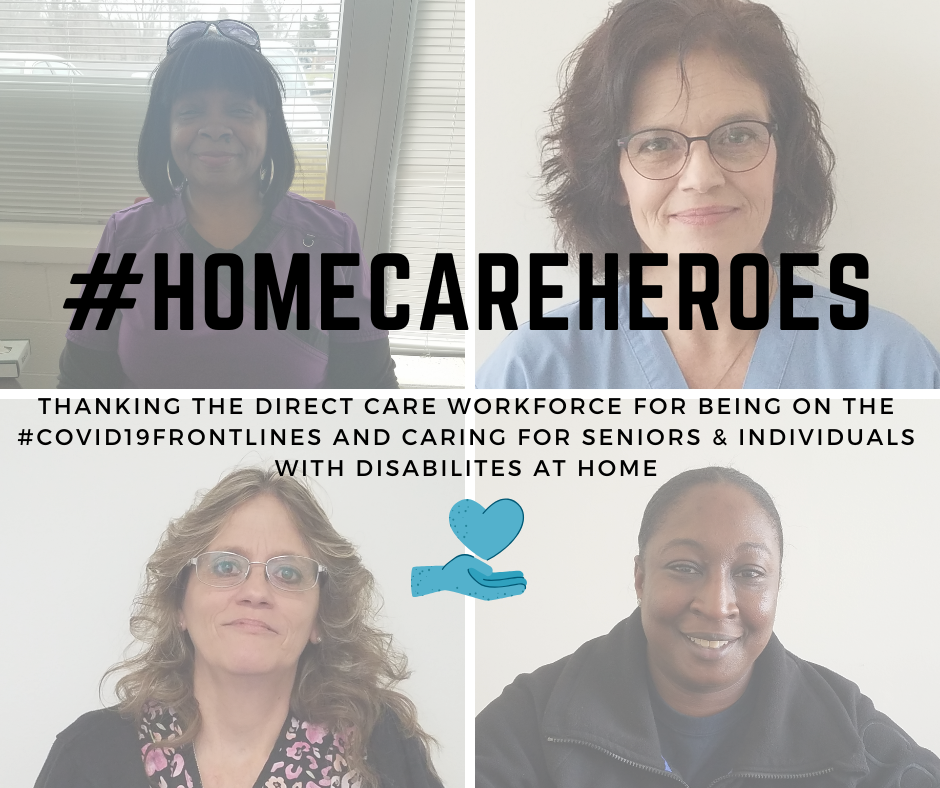
Right now, as we work from home, and find new books and Netflix shows to keep us occupied, there is a group of workers on the COVID 19 front lines battling to keep area seniors and individuals with disabilities healthy, taken care of, and connected to services and support to meet their vital needs. These workers are the area caregivers and home healthcare workers of Berrien, Cass, and Van Buren counties.
Home healthcare workers help patients in need, some of whom have no one else to turn to with tasks they cannot accomplish themselves. This can involve anything from bathing, dressing, and feeding them, to clinical tasks such as administering lifesaving medication, maintaining high-technology medical equipment for nutrition and respiration, monitoring blood pressure readings, helping those experiencing incontinence, and keeping regular range of motion exercises to prevent atrophy.
The first call to slow the spread of the coronavirus was asking employers to let employees stay home and work remotely. That is not an option for home healthcare workers and caregivers, who must be on-site physically to do their job. These are life-sustaining tasks for the clients they serve. Not only for medical reasons. Oftentimes these workers are the friendly face, the regular conversation, and the caring friend that helps homebound clients refute loneliness and stay in touch with the world.
Now, more than ever, home health care, healthcare support workers, and caregivers are a critical component in the prevention and spread of this virus, and in protecting those with compromised immune systems as well as those over the age of 60, from contracting it. However, the industry experiences its own hurdles. As reported by NPR recently, lower wages and limited access to affordable health care can put workers and their own families at risk right now. According to the U.S. Census Bureau, women in the U.S. hold 76% of home health-care jobs and are out caring for the home-bound, while their children are also home from closed schools. Being deemed essential, these workers are out in the field trying to avoid corona virus exposure, juggle child-care and meals for their own family, while also trying to maintain 40 hours to keep their families finances consistent.
They do it however because they care. Ask any home health care worker or caregiver, and they have an impactful story about one of their clients, about the connection they have with them, and about how much they enjoy the work of enriching and sustaining lives. How can we thank them? We offer these ideas as ways we can show the home health care industry appreciation during this time. Please share this with the hashtag #HomeCareHeroes, also, encourage your friends in the industry to post their picture in the comments so we can thank them, and put a face to the people hard at work:
- Feed a Local Healthcare or Home-care Professionals-Arrange for food delivery if allowed or send them gift cards to local restaurants so they can grab a bite when they get a break from the hospital, care facility, or in between home visits. Any way you can help feed them so they can get back to work can make a big difference.
- Help a Healthcare Worker with Groceries-Reach out to the people who you know in your community with these jobs and see what they need for groceries and do a grocery run for them. Many individuals in this industry work exceptionally long hours (especially with a crisis like the one we are currently facing) and may not have the time or energy to pick up food/groceries when they have limited time off to rest.
- Offer to help with childcare or their pets-With 69,000 schools across the U.S. being closed, or scheduled to close due to the corona virus, figuring out how to do their job, and take care of their children or pets can be overwhelming. Offer to watch their children for a few hours or to walk their pet. That way they can work knowing their family is taken care of.
- Keep Donating Blood- Recently the American Red Cross announced it’s experiencing a “severe blood shortage” due to many blood donation drives being cancelled or postponed due to the corona virus. Besides needing many medical supplies to prepare for and keep up with the pandemic, there is always a need blood to be donated. If you’re healthy find a nearby place to donate.
- Give home healthcare providers, caregivers, or anyone you know in the medical industry, a social-media shutout- Sometimes just being appreciated can go a long way in helping boost someone’s spirits. Knowing you recognize their sacrifice and care enough to thank them could give that exhausted nurse or home healthcare professional the strength to face another shift or to go to three houses to care for patients.
- Self-quarantine – Flattening the curve is key to slowing the spread of the corona virus and giving healthcare professionals a chance to take care of the people who need it. Even if you do not feel sick, staying home will be a great help. It’s time to get creative with FaceTime, Google Hangouts, and more, in order to give the healthcare industry workers more time and resources.
Featured in this photo are home care workers: (top left) Eva Drive (top right) Susan Worcester (bottom left) Mary Curtis and (bottom left) Taniel Porter